

(from Henri J. M. Nouwen’s Reaching Out)

Jeff Reimer, in a moving essay entitled “How Not to Be a Schismatic,” ruminating on his ecclesial pilgrimage and his unsuccessful attempts to find a church with a plausible claim to orthodoxy, unity, and visibility:
I want ecclesiological rest, but a quality of rest available only to the eschatologically reconciled body of Christ. What I have been searching for is a perfected church. I have been looking not so much for the wrong thing as for the right thing in the wrong way, and at the wrong time. To be sure, there are still myriad theological conundrums to sort out and corrections enough to undergo. A lifetime’s worth. But what I have been yearning for is to pull a future cleansed of all error and wrongdoing prematurely into the present and to claim it for myself. Every one of my failed attempts to convert to this or that tradition has thus been a failure by God’s grace to find the “perfect” church, the right story, the all-encompassing ecclesiological narrative without remainder. The terms under which I was searching were setting me up for disappointment no matter where I landed. In a sense, then, my tethering myself to my community and to my tradition did just the work I intended it to do: it did restrain me from my own worst impulses. Sometimes God uses our best ideas against us.
It turns out that the most hopeful thing for wayfarers of all kinds to do might be to deflate their expectations a little. The tidier one’s story of the church is, the more likely it is that one has lost hope—whether from despair, losing sight of the destination, or from presumption, thinking one has already arrived. I don’t say this to undermine the self-understanding of any given tradition but to insist that any account of the church, whether Protestant, Catholic, or Orthodox, must always in some sense be an account of a wayfaring church (even if they conceive of wayfaring differently—and they do). […]
I suppose all that just makes me a Protestant, though maybe a weird one. Another of my Catholic heroes, Walker Percy, says, “In the present age the survivor of theory and consumption becomes a wayfarer in the desert, like St. Anthony; which is to say, open to signs.” So I remain alert, muddling through the in-between, bearing in myself the wounds of division—casualty, perpetrator, and penitent. Wounds that can be mended only by seeking the healing draft of Christ’s blood and the nourishment of his restoring flesh.
To wait for moments or places where no pain exists, no separation is felt and where all human restlessness has turned into inner peace is waiting for a dreamworld. No friend or lover, no husband or wife, no community or commune will be able to put to rest our deepest cravings for unity and wholeness. And by burdening others with these divine expectations, of which we ourselves are often only partially aware, we might inhibit the expression of free friendship and love and evoke instead feelings of inadequacy and weakness. Friendship and love cannot develop in the form of an anxious clinging to each other. They ask for gentle fearless space in which we can move to and from each other. As long as our loneliness brings us together with the hope that together we no longer will be alone, we castigate each other with our unfulfilled and unrealistic desires for oneness, inner tranquility and the uninterrupted experience of communion.
(from Henri J. M. Nouwen’s Reaching Out)
Henri J. M. Nouwen, speaking my love language as he cautions about the dangers of trying to track spiritual progress:
In a society that gives much value to development, progress and achievement, the spiritual life becomes quite easily subject to concerns expressed in questions such as, “How far advanced am I?"—“Have I matured since I started on the spiritual path?"—“On what level am I and how do I move to the next one?"—“When will I reach the moment of union with God and the experience of illumination or enlightenment?” Although none of these questions as such is meaningless, they can become dangerous against the background of a success-oriented society. Many great saints have described their religious experiences, and many lesser saints have systematized them into different phases, levels or stages. These distinctions can be helpful for those who write books and for those who use them to instruct, but it is of great importance that we leave the world of measurements behind when we speak about the life of the Spirit.
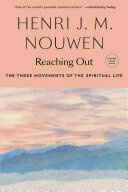
Currently reading: Reaching Out by Henri J. M. Nouwen 📚
Me and Lewis (just chillin')