For whatever reason, this has been the track for summer 2023.
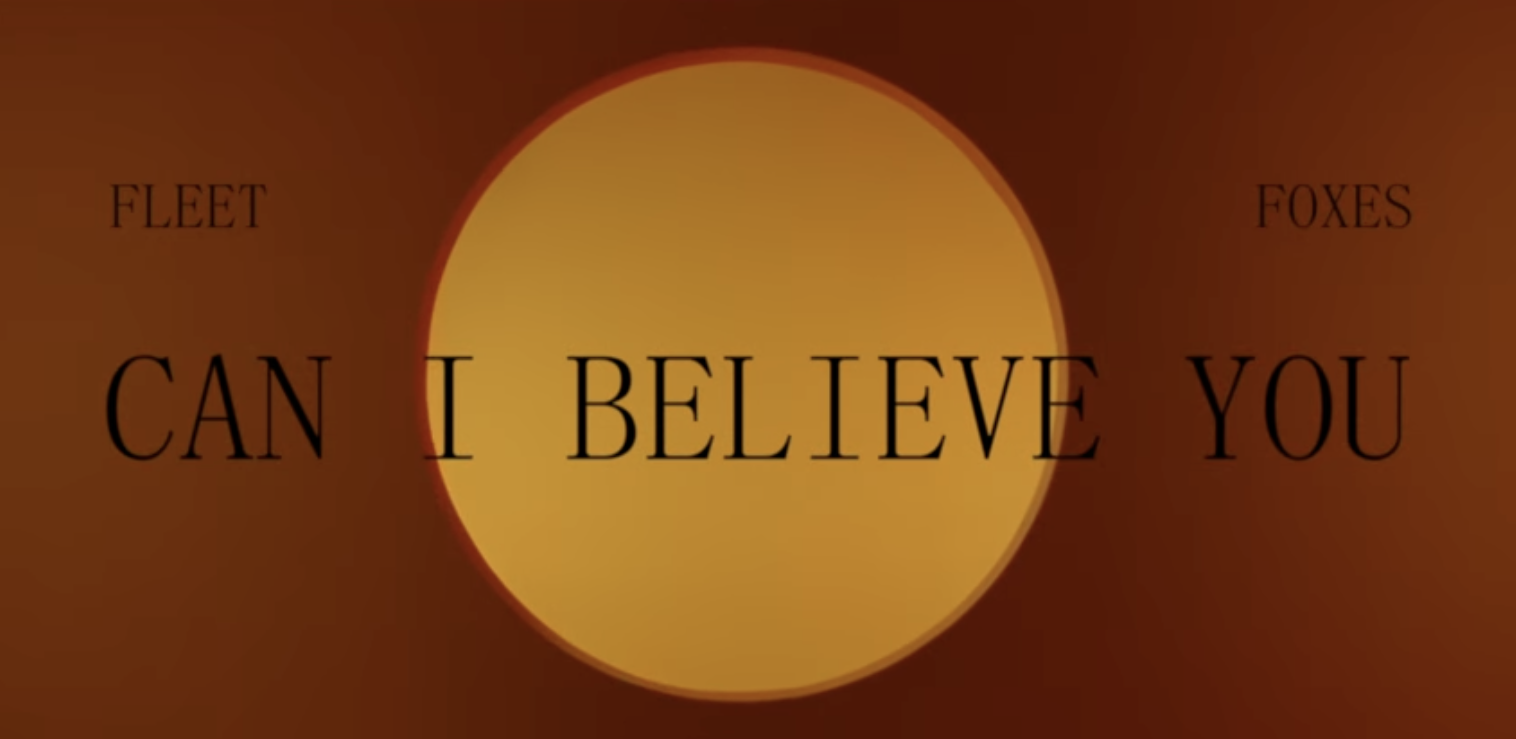
For whatever reason, this has been the track for summer 2023.
Thesis: The best cultural criticism is at least a decade old, and often a good bit older.
The reason this is so is because incisive cultural criticism penetrates beneath the ephemera to the deeper forces shaping society and human life. These forces, it turns out, have a complex history and, therefore, continue to exert influence even beyond technological innovations or surprising political realignments. The best cultural criticism brings these structural dynamics into view. But it’s difficult to discern a book’s prescience except with hindsight. That’s why Lasch and Bellah (and so on) are still quoted regularly. It’s why Taylor’s A Secular Age seems to be a bottomless well for writers to draw from. And it’s why much of the best tech criticism—e.g., Postman, Ellul, Illich, Borgmann—was published so long ago.
So, a proposal for testing my thesis. Let’s take Carl Trueman’s The Rise and Triumph of the Modern Self, which has been lauded as a brilliant work of intellectual history. Trueman’s narrative seems to offer a level of explanatory power for people trying to make sense of how Western culture has arrived at the place it’s at. To be clear, though I’ve not read the book, I fully expect that all the accolades are well deserved. Trueman is a top-notch historian and I assume his work is well-researched and tightly argued. My thesis would merely suggest that Rise and Triumph, if it is in fact the incisive work of commentary that we currently believe it to be, will be able to illuminate unforeseen circumstances in a decade or two. It’s ability to be uncannily relevant to a later time—where you check the copyright because it feels like it was written yesterday—that, to me at least, is the truest mark of a great work of cultural criticism.
Given how much I’ve enjoyed his Freedom for Ministry, I thought it wise to read a little more about Rev. Neuhaus. The son of a Lutheran minister, Neuhaus served with both the Missouri-Synod and the ELCA for roughly three decades before being received into the Catholic church in 1990. In “How I Became the Catholic I Was,” Neuhaus eloquently recounts his ecclesial pilgrimage, spelling out how his earliest intuitions about the Church—nurtured in St. John’s Lutheran Church in the Ottawa Valley of Canada—set him on a path that ultimately led to his embracing the Catholic faith. I find very intriguing his notion of becoming, even at a young age, an “ecclesial Christian.” Here’s how he puts it,
To be brought up a Lutheran, at least a Missouri Synod Lutheran, at least there and at least then, was to know oneself as an ecclesial Christian. Of course I did not put it that way as a young boy, nor was it put that way to me, but I would later see what had happened. An ecclesial Christian is one who understands with mind and heart, and even feels with his fingertips, that Christ and his Church, head and body, are inseparable. For the ecclesial Christian, the act of faith in Christ and the act of faith in the Church are not two acts of faith but one. In the words of the third century St. Cyprian, martyr bishop of Carthage, “He who would have God as his Father must have the Church as his mother.” In an important sense, every Christian, even the most individualistic, is an ecclesial Christian, since no one knows the gospel except from the Church. Extra ecclesiam nulla salus—no salvation outside the Church—applies to all. For some, that truth is incidental; for the ecclesial Christian it is constitutive, it is at the very core, of faith and life.
A little further on, Neuhaus summarizes his experience this way,
I simply underscore the ways in which being brought up a Missouri Lutheran—at least then and at least there—produced an ecclesial Christian. One might also speak of a sacramental Christian or an incarnational Christian, but, whatever the terminology, the deepest-down conviction, the most irrepressible sensibility, is that of the touchability, the visibility, the palpability of what we might call “the Christian thing.” To use the language of old eucharistic controversies, finitum capax infiniti—the finite is capable of the infinite. Put differently, there is no access to the infinite except through the finite. Or yet again, God’s investment in the finite can be trusted infinitely. Although Lutheran theology discarded the phrase, it is the ex opere operato conviction evident in Luther’s ultimate defiance of Satan’s every temptation by playing the trump card, “I am baptized!” Ex opere operato is the sacramental enactment of sola gratia. It is uncompromisingly objective. By it morbid introspection, the delusions of religious enthusiasm, and the endlessly clever postulations of the theological imagination are called to order by truth that is answerable to no higher truth; for it is Christ, who is the Truth, who speaks in the voice of his Church—“I baptize you . . . ,” “I forgive you your sins . . . ,” “This is my body . . . ”
Much could be said in response to all this. I simply want to register how salutary it is to conceive of oneself as “an ecclesial Christian.” This seems to track with Brad East’s distinction between “biblicist” and “catholic” Christians. Give me catholic over biblicist any day. The question, however, that this raises for me: Is it possible to be an “ecclesial Christian”—a ‘catholic’ Christian—and a committed Protestant? Does Protestantism allow for this kind of vision? I believe it does, but it’s uncomfortable to know that many ecclesially-inclined Christians see conversion to Rome as the only viable option.
It may seem like a cop-out to say that great preaching cannot be defined, you just know it when it happens, but so it is. In all great Christian preaching, however, at least this is true: It is an Emmaus-like experience in which the scriptures are opened and you recognize Christ, and in him, with a fresh sense of discovery, you see the truth about yourself and your world. “Did not our hearts burn within us while he talked to us on the road, while he opened to us the scriptures?” (Luke 24:32). Underscoring the unity of the verbal and sacramental Word, this experience prepared the disciples to recognize their Lord in the breaking of bread. Wherever this happens, there is great preaching.
Were one to indulge in paradox, it is not too much to say that the most relevant thing about worship is its irrelevance. True worship is an act of liberation because it defies every criterion of utility by which our lives are too much bound.
I’m reminded of Marva Dawn’s A Royal Waste of Time. To justify Christian worship on the grounds of its usefulness is to evacuate it of any integrity or meaning. Which is easy for me to point out, but it is astounding how deeply embedded are such notions of utility, even for ministers of the gospel.
The sign on the front of a Presbyterian church in Indianapolis reads: “Join Us For Worship. You Will Feel Better For It!” It is far from obvious that worship will make one feel better. To be sure, in a very ultimate sense, surrendering oneself to God in thankful trust will make one be better. But along the way to being better the Christian is sure to go through times of feeling worse. Repentance, after all, involves a painful loss of self, an abandonment of false securities, and the travail of new birth. It is also true with respect to what happens on Sunday mornings: Woe to you when they say it feels so good.

If we are honest with ourselves, such signs of really making a difference are very ambiguous. So also with the signs of institutional growth, although, sorry to say, this seems to provide a basis of confidence—or, conversely, a cause for despair—in many ministries. Institutional growth is the last refuge of ministries that are spiritually sterile. Anniversary sermons regularly point to statistical growth or to the new education wing as evidence that “God has richly blessed this ministry.” But the question that keeps erupting within us, as to whether our ministry really makes any difference, cannot be answered by reference to a debt-free “church plant”—to use the ugly term of the managerially minded.
…
Our ministries are not liberated, and we cannot be signs of liberation to others, as long as we are captive to the criterion of effectiveness by which the world would bind us. By “the world” we mean in this instance what Paul describes as “the flesh.” The conflict is not, in the first place, between us who are the saved and others who are the unsaved…. The conflict is within ourselves; it is a conflict between living according to the flesh and living according to the Spirit. Nor is the struggle aimed at our achieving some decisive spiritual victory, although the military metaphor is frequently used in biblical and classical literature. The achievement involved, however, takes on a meaning quite different from our usual talk about achievements. It is always a matter of living out the gift already given. This is the heart of liberated and liberating ministry: to know that our ministry and the goal of our ministry are gifts. We do not need to sniff around the secular criterion of effectiveness in order to be assured that our ministries are legitimated. We and the work we have been given to do are already legitimated and justified by the grace of God. This is God’s sacramentum in Christ and the community he has called into being; it is the premise and the promise on which alone we can act in confidence.