
The Seine (c. 1902) by Henry Ossawa Tanner:

The Seine (c. 1902) by Henry Ossawa Tanner:

Checking out Barrett’s for the afternoon


Finished reading: How to Be Normal by Phil Christman 📚
A fun “how to” guide on various “normal” topics (e.g., how to be: a man, white, religious, married, midwestern, and so on). Christman is not offering advice (the title notwithstanding); his writing style is well-suited to the essay format, as he explores each topic with one eye on his own experience. His prose is crisp, funny (but not overly so), and poignant at the right times.
“Tradition” names the way in which Christian identity is sustained across differences of time and place. The mission of tradition is “the mediation of the past.” Tradition is “the handing down of the Bible, and more specifically, its interpretation, throughout the Christian centuries”; it is “the art of passing on the Gospel.” Problems arise when, in the process of transmission, the product of tradition—a doctrine, a practice—changes. The otherness of the past is constantly in danger of being obscured because it is studied, classified, and organized according to the interests of the present. The challenge of tradition is to relate to the past without obliterating its otherness. How can the church mediate the revelation of God in Jesus Christ to people today who speak different languages and inhabit different cultures? How can the church be faithful to the past—to the history of Jesus Christ—while being unavoidably different?
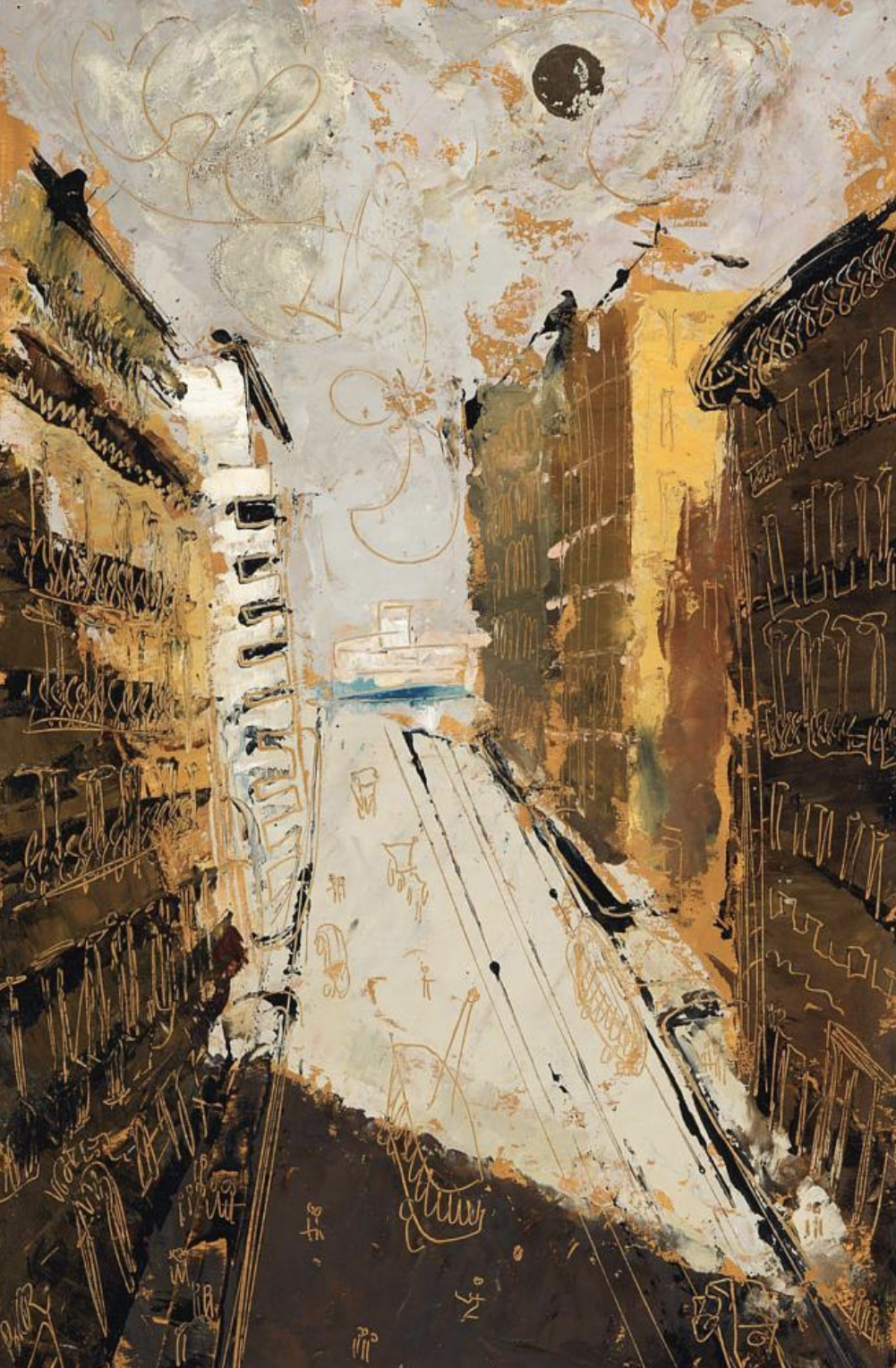
Naples Afternoon (c. 1948) by William Congdon:
Matt Dinan, on “Friendship as Soulcraft”:
Maybe men struggle with living meaningful lives precisely because they believe themselves complete without friendship. Friendship gives us a needed break from our own autonomy, from the need to figure everything out for ourselves. Friends refract the world back to us, taking what we thought we knew and making it new and different, but still capable of being understood. In this way, friendship is about alterity, about openness in the place of assertion. Friendlessness is often adduced as one of the symptoms of the “problem” with men, but such alienation is not a symptom of the lack of flourishing—it is, rather, its cause.